Why are the US and Israel attacking Iran?

Has Iran agreed to a ceasefire?
The US and Iran agreed a temporary, two-week ceasefire on 8 April 2026 – but just a day later the ceasefire was broken.
Pakistan – which helped negotiate the deal – and Iran stated that the ceasefire would include Lebanon. Israel claimed the opposite – and on the same day, launched its largest attack since its assault on Lebanon began, targeting over 100 locations across the country without any warning, killing at least 254 people. Iran once again blocked the Strait of Hormuz – one of the most important shipping lanes in the world – due to Israel’s continued attacks on Lebanon.
Israel has a history of breaking ceasefire deals and attacking in the middle of negotiations. Israel broke both its ceasefire with Hezbollah in Lebanon in 2025, and the ceasefire that was meant to end Israel's genocide of the Palestinian people in the Gaza Strip, which is still ongoing.
It’s not clear what the exact terms of the temporary ceasefire are, or whether it will hold. Iran has put forward a ‘10-point peace plan’ as the basis for more peace talks, which was welcomed by the US administration – despite the US previously rejecting many of the demands. The US has put forward a 15-point plan. Both plans are quite different from each other.
Why are the US and Israel attacking Iran?
The US and Iran have had a hostile relationship for many years. The US and Iran have interfered in each other’s politics, had hostage crises, conflicts and disputes over Iran’s nuclear programme. The Iranian regime has oppressed its people for nearly fifty years, and the US has often called for regime change.
Different reasons have been given over the last few weeks for why the US is attacking Iran, many contradicting each other. One reason the US and Israel have given is around nuclear weapons. The US and Israel claim that Iran wants to have nuclear weapons – Iran claims it is using uranium (a radioactive metal) for domestic purposes. International nuclear inspectors, and the US’s own intelligence, have not found evidence of an Iranian nuclear weapons programme.
In 2025, negotiations between the US, Israel and Iran, mediated by Oman, were reportedly close to agreement where Iran had committed not to pursue nuclear weapons. Despite this, the US and Israel started to attack Iran in the middle of another round of negotiations.
No imminent threat has been proven, and Iran did not attack the US. However, the US and Israel are close allies, and leaked reports show that US President Donald Trump was heavily influenced by Israeli lobbying to attack Iran. Israeli Prime Minister Netanyahu convinced Trump that given the Iranian regime’s attacks on its own people, there was an opportunity for the US and Iran to topple the regime.1
This is a war of choice – not necessity.
Why are Israel and Iran at war?
Israel has seen Iran’s repressive regime as a threat for a long time. But Israel’s latest attacks on Iran are part of a broader strategy of Israeli violence across the region.
Israel is still committing genocide of the Palestinian people in the Gaza Strip. Six months after the so-called ceasefire, Israel has killed over 650 Palestinians, crossings out of Gaza remain blocked, and essential food, medical supplies and humanitarian aid are being denied. Israel is stealing more and more land from Palestinians in the West Bank, and Israeli settlers attack Palestinians almost daily.
Israel has escalated its attacks on Lebanon and Syria. Israel has invaded Lebanon – sending in soldiers to South Lebanon, forcing Lebanese people to leave and destroying their homes.
Israel’s attacks are part of a clear plan to expand its control in the region. Israel’s Prime Minister Benjamin Netanyahu supports the idea of a “Greater Israel”.
Why have oil and gas prices increased?
Israeli attacks have targeted Iran’s energy systems, including the South Pars gas field – the largest in the world. Iran has retaliated with strikes on Qatar’s North Field – which supplies roughly 20% of global liquefied natural gas exports (gas that has been cooled to a liquid so it’s easier to transport).
These disruptions, as well as Iran’s closure of one of the most important global shipping lanes – the Strait of Hormuz – in retaliation, have reduced the global fossil-fuel supply, which has pushed prices of energy up sharply.
This war has impacted the price of gas in particular because Europe and other countries had started sourcing gas from Qatar instead of Russia, due to sanctions on Russia for its war on Ukraine.
Oil prices surged by 37% to £83 ($110) per barrel in March 2026. Even once the war ends, prices are likely to stay high for months, if not years, because of the disruption to supply chains.
Because oil and gas prices are set globally, the war is affecting countries everywhere, driving up electricity, heating and fuel and fertiliser costs, putting more pressure on farming and food.
Who benefits from this war?
Big corporations, politicians and the super-rich are benefiting most from the war with Iran.
Fossil-fuel corporations profit from rising oil and gas prices – oil giant Shell’s value was up 27% in early March 2026, to an all-time high of £190 billion.
The arms industry profits from the increased demand for weapons – while ordinary people are harmed. Increasing military attacks mean more people dying, more stolen land and more violations of human rights.
Unknown individuals are also benefitting from the war through betting. Just before the US and Israel attacked Iran, anonymous accounts online bet thousands of pounds that the attacks would happen that day – suggesting that they had insider information on when the strikes would happen.
Russia is benefitting from the war in Iran because of higher oil prices and a temporary easing of US sanctions, which has allowed Russia to sell more oil. The profits could help Russia in its war on Ukraine.
Across the world, ordinary people pay the price while corporations and the super-rich benefit from war.
Is the attack on Iran illegal?
The war on Iran violates international law. The UN Charter states that no country can attack or ‘use force’ against another country. The only clear exception to this is in cases of self-defence, and only “if an armed attack occurs”. Iran did not attack the United States or Israel and no imminent threat existed.
The strike came during ongoing negotiations between the US, Israel and Iran on Iran’s nuclear programme – which violates the UN Charter.
How does the US and Israel’s war on Iran relate to the US attack on Venezuela?
The war with Iran is a clear example of imperialism in action. For centuries, powerful Global North countries like the US have colonised Global South countries – taken control and stolen their resources, land and people for their own gain. Israel has done the same by occupying the Palestinian territory.
Now, the US and Israel are using this war to control access to oil, gas and other resources in Iran and the Gulf – prioritising the profit of fossil-fuel corporations over the lives and livelihoods of people in Iran and beyond.
The US did the same thing when it attacked Venezuela in January 2026 – to secure US access to Venezuela’s oil, while reducing China’s access to it. US threats to seize Greenland would give the US access to essential minerals. The attack on Iran is not a one-off, but the latest moment in a long history of imperialism.
What is the Strait of Hormuz and why does it matter?
The Strait of Hormuz is one of the most important global shipping lanes. Around 20% of the world’s oil and gas passes through this narrow waterway, which is just 20 miles wide at its narrowest point. Any disruption, or even the threat of disruption, immediately affects the price of oil and gas. In late March 2026, oil passing through the Strait was at just 4% of normal levels.
Iran’s closure of the Strait of Hormuz, along with attacks by the US, Israel and Iran on energy infrastructure in the region, are driving up prices of oil and gas everywhere.
How is the UK involved in the US-Israel attack on Iran?
The UK has not formally joined the US–Israel war on Iran but is helping by allowing the US to use British airbases – including Prestwick, Fairford, Lakenheath and Akrotiri (in Cyprus) and – on their way to Iran. UK bases have been used for refuelling, maintenance, crew rest and possible arming, both before and during the bombing of Iran.
The US-Israeli attacks on Iran violate international law, as there was no attack or imminent threat to Israel or the US. Providing UK bases risks UK complicity in the illegal attacks.
Campaigners are calling for a parliamentary vote to ensure that the US cannot use UK bases – and put the UK at risk of repeating the grave mistakes of the Iraq war.
Is Iran a threat to the UK?
Iran hasn’t directly threatened the UK. British officials stated that there is no risk of conventional attack on British soil. However, the war will directly impact the UK economy, and diplomatic relations with other countries.
What impact is this war having on people in Iran?
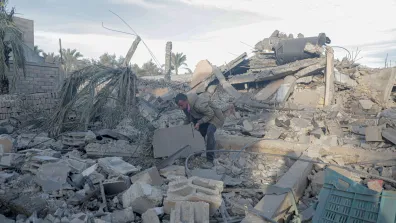
The US-Israeli attacks have killed at least 2,000 Iranians as of 7 April 2026 – including over 150 schoolgirls when bombs fell on the playground of the Shajareh Tayyebeh school in southern Iran. Airstrikes have hit 24 of Iran’s 31 provinces, targeting homes, hospitals, schools and critical infrastructure. Millions of Iranians have been displaced. Families are sheltering in basements or fleeing cities.
At the same time, Iranians are still living under a repressive regime. In January 2026, during nationwide protests, the Iranian government killed tens of thousands in the streets in just a few days. On 28 February – when the US and Israel attacked – the regime shut down internet access. The regime is using the current conflict to further consolidate its own power and repress its people, targeting human rights defenders and carrying out human rights violations, including torture and executions.
The environmental impact of the use of weapons is widespread. Attacks on oil and gas facilities have caused fires and toxic smoke, contaminated water and farmland and threatened public health. Land and ecosystems are being destroyed, threatening long-term access to food, and people’s livelihoods.
What impact is the Iran war having in the UK and globally?
UK households are already paying the price of the US-Israeli war on Iran.
Petrol, heating oil and electricity prices have risen sharply. Central heating oil in rural areas has more than doubled as of March 2026, while household electricity and gas bills continue to surge.
Although the UK generates 40-50% of electricity from renewable sources, like windfarms, prices are set globally – so an increase to oil and gas prices anywhere, affects prices everywhere. Expanding North Sea fossil fuel production would not affect oil prices in the UK.
Countries in the Global South are disproportionately affected. In the Philippines capital, Manila, hundreds of transport workers have gone on strike over rising fuel costs. Many Global South countries are dependent on imports, so rising prices of fuel, fertilisers and food worsen the economic and humanitarian crises they face – which are already heightened by the climate crisis and rising inflation.
How do we protect people from war and economic crises?
War was not inevitable. The rush to increasing militarisation makes us all more insecure. The US, Israel and Iran must urgently de-escalate, engage in diplomatic negotiations, and follow international law.
The war shows how reliant the world is on fossil fuels – and how one event can increase profits for corporations while communities suffer.
Instead, we should be investing in a just transition to fairer societies and economies built on renewable energy, well-funded public services and equality, into a future where workers and communities in the UK and in the Global South are supported.

Sign up for emails
Get more expert analysis from War on WantThis article was last reviewed on 10.04.2026.
Share this page
Read next
US attacks on Venezuela explained
The Western Sahara: 50 years of Morocco’s illegal occupation